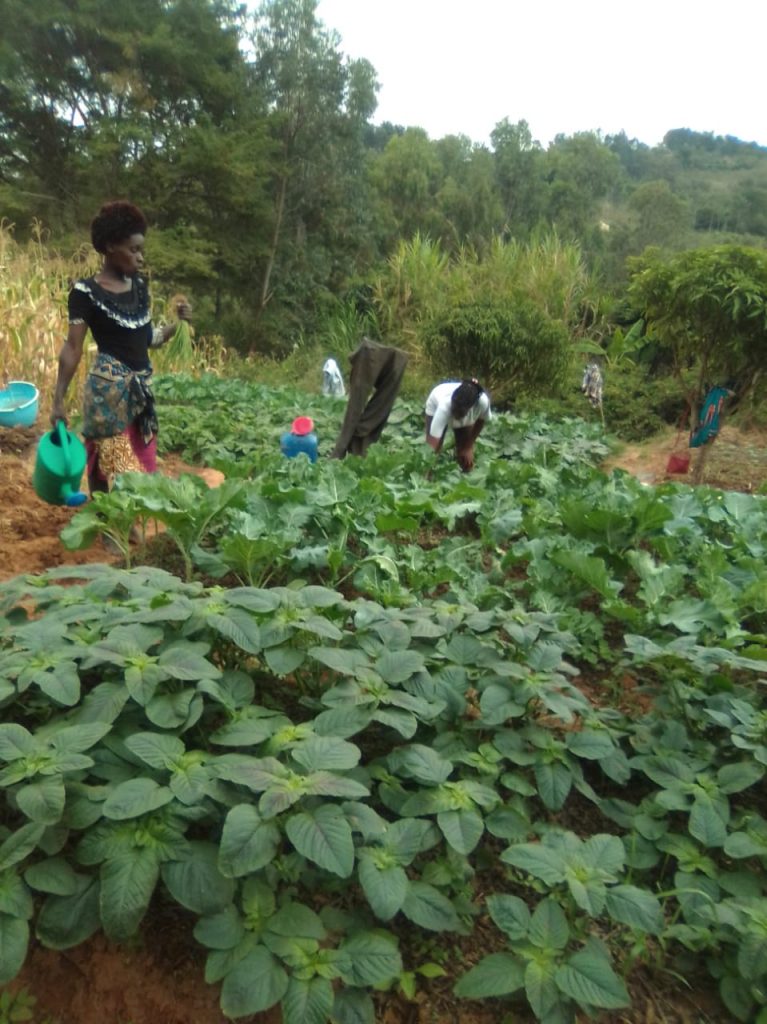
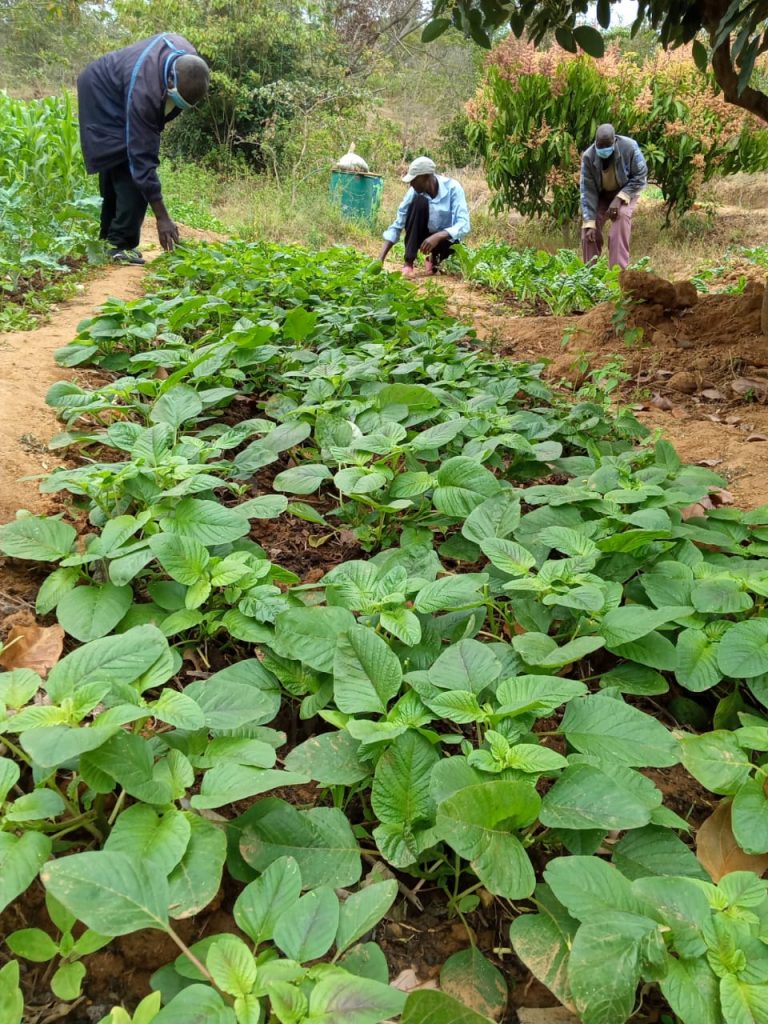
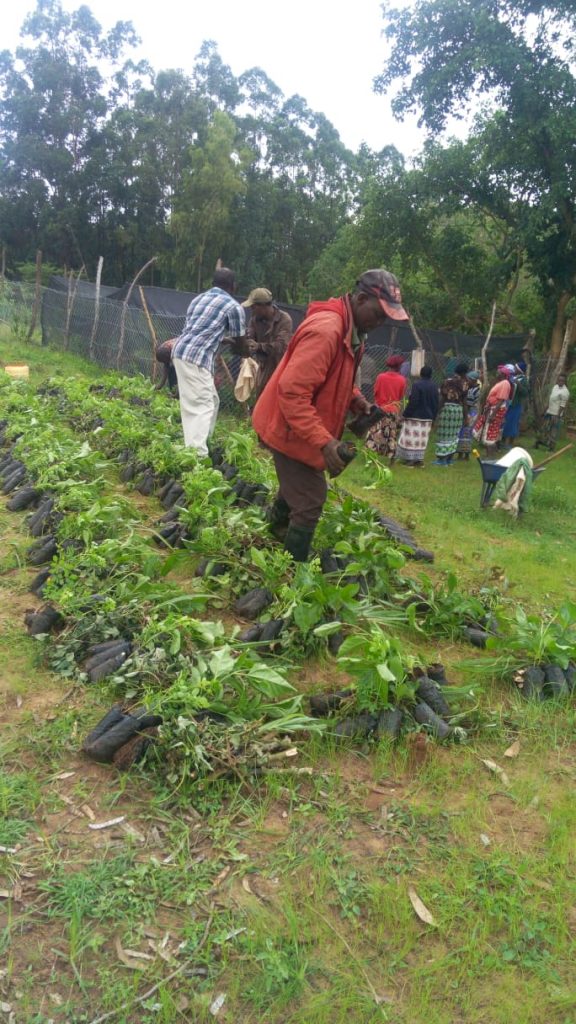
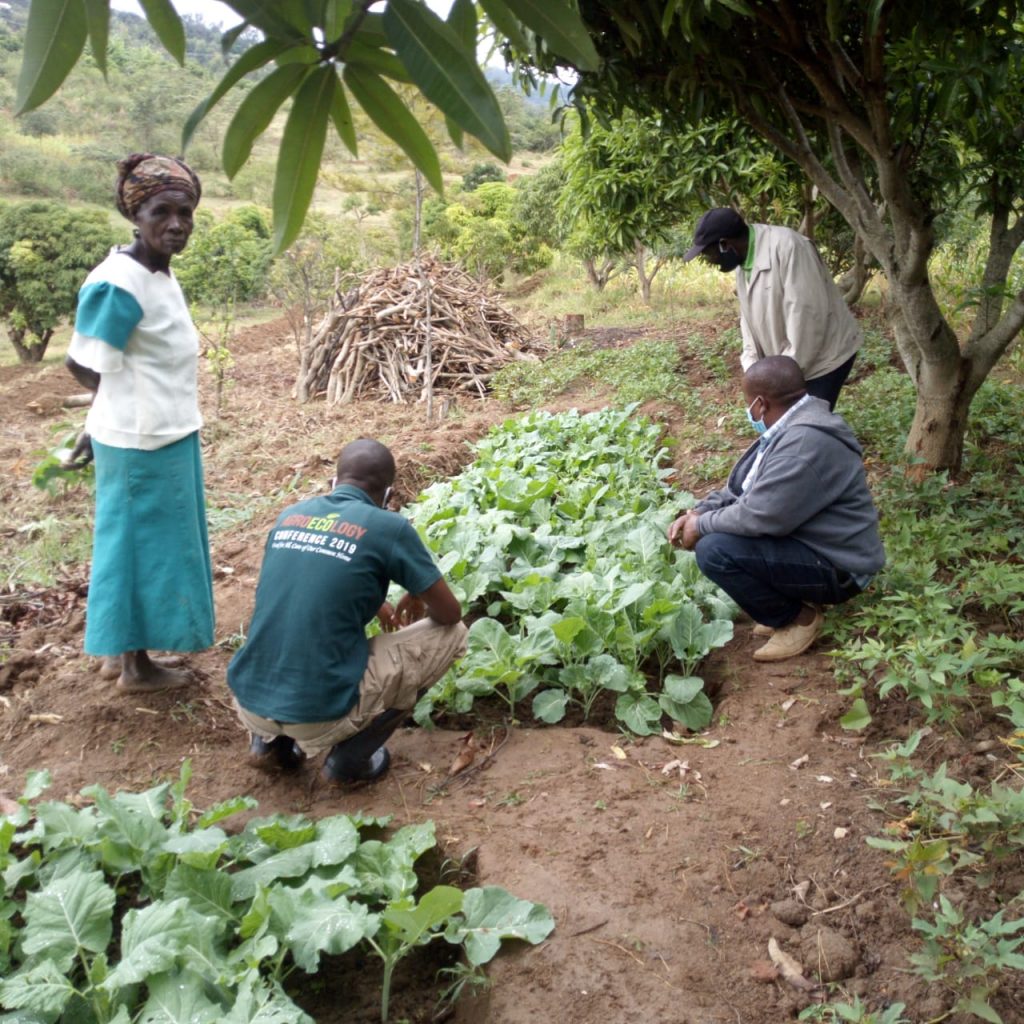
Agroecology farming practices through food forest, tree nurseries and kitchen gardens.
Utooni Development / Our Work / Agroecology
Agroecology

Overall objective: The small-scale holder farmers in Kaiti Sub County achieve food security in solidarity in quality and quantity.
By 2020, 850 farmers were reached in the project, of this 574 are females and 276 are male farmers.

Different seed which farmers have collected for storage and they want to exchange during planting season.
Agroecology project (Community groups achieve right to food in solidarity through agroecology practices) aims to empower small scale Makueni County, in four villages of Kaiti sub county namely Mukuyuni, e groups are trained through rotational household on-farm training, holder farmers in 60 solidarity groups. e project is implemented in Utaati, Kalembwani and kaiti. 1214 (251 M and 963F) small scale farmers in 60 solidarity groups have been reached through agroecology project. at solidarity member’s farms on concept of solidarity, group dynamics, bio intensive kitchen garden, food forest, nursery establishment and management. Through solidarity approach, farmers have witnessed cheap labour in their farms which has led in designing and lying of farm structures such as terraces and tree holes for food forest which are labour intensive. The agroecological trainings have enable 1,180 (236 M and 935 F) farmers to produce more and healthier food using a small piece of members to access money without being exploited i.e rate of contribution in agroecology saving is guided land. Farmers have acquired skills in compost manure preparation and integrated pest management which has lowered the cost of farming. Multi story gardens through agroecology trainings have increased availability of vegetables to our farmers during harsh weather conditions.)
OBJECTIVES OF THE PROJECT
- The application of agro ecological practices i.e. soil fertility, water conservation and harvesting and diversification enabled 3258 direct beneficiaries to achieve food security and healthier diets.
- Strengthened members of solidarity groups are empowered to manage their own savings and credit schemes to cover basic needs, reduce loses and exploitation
- Strengthened members of solidarity groups and school agro ecology clubs undertake common initiatives and common labour that ensured food security in quantity and quality
Kalee Musyimi
Dedicated farmer on her bio intensive kitchen garden
MEET OUR PARTNER

Fastenopfer
Dare to change – promote global justice.
Fastenopfer is the aid organization for Catholics in Switzerland. We stand up for disadvantaged people – for a fairer world and overcoming hunger and poverty.
We promote social, cultural, economic and also individual changes towards a sustainable way of life. To this end, we work with partner organizations in 14 countries in Africa, Asia, Latin America and organizations in Switzerland.